
The Life that Fits
Grief coaching for women after separation, divorce, major breakup.
Why Grief and Separation?
I have experienced grief both after losses beyond my control and after an ending I helped choose. My first encounters were childhood goodbyes. Growing up in a diplomatic family meant leaving friends, languages, and familiar places behind. I missed the monkeys in our garden in Kenya even as I discovered the joy of climbing apple trees in Switzerland. Grief helped me honour what I missed while finding my place somewhere new.
Later, losing a parent to illness meant finding a different way to stay connected. Everyday conversations gave way to memories and a bond that continued beyond their physical presence.
Separating from my husband felt different. I had been part of the decision, yet still grieved our marriage and the future I had imagined. Choosing an ending did not make the loss less real: I could understand why we were separating and still feel that I had lost my footing.
To find some steadiness, I focused on what hurt that day rather than trying to solve the whole future at once. I also learned to notice small moments of beauty that brought relief. Grief became a way of recognising how deeply I had cared while making room for life to take a different shape.
If you are grieving a relationship, a shared life, or an imagined future—even an ending you helped choose—this is the understanding I bring to our conversations.
Separation can unsettle your sense of home, identity, trust, belonging, and the future you had imagined. Past, present, and future—and many of the assumptions tied to them—may seem to collapse at once. Even as you manage the demands of everyday life, you may also be carrying grief, anger, uncertainty, or exhaustion.
The Life That Fits offers a calm, confidential coaching space where we can reflect together on what has changed, recognise your inner resources, and develop a vision for a life that fits you—one aligned with what nourishes you. Together, we explore what you want to say yes to, so you can “swipe right” on a vision of life that feels genuinely your own and consider practical decisions about what comes next.
Coaching does not promise a particular emotional outcome; it supports a process of reflection and choice.
Welcome
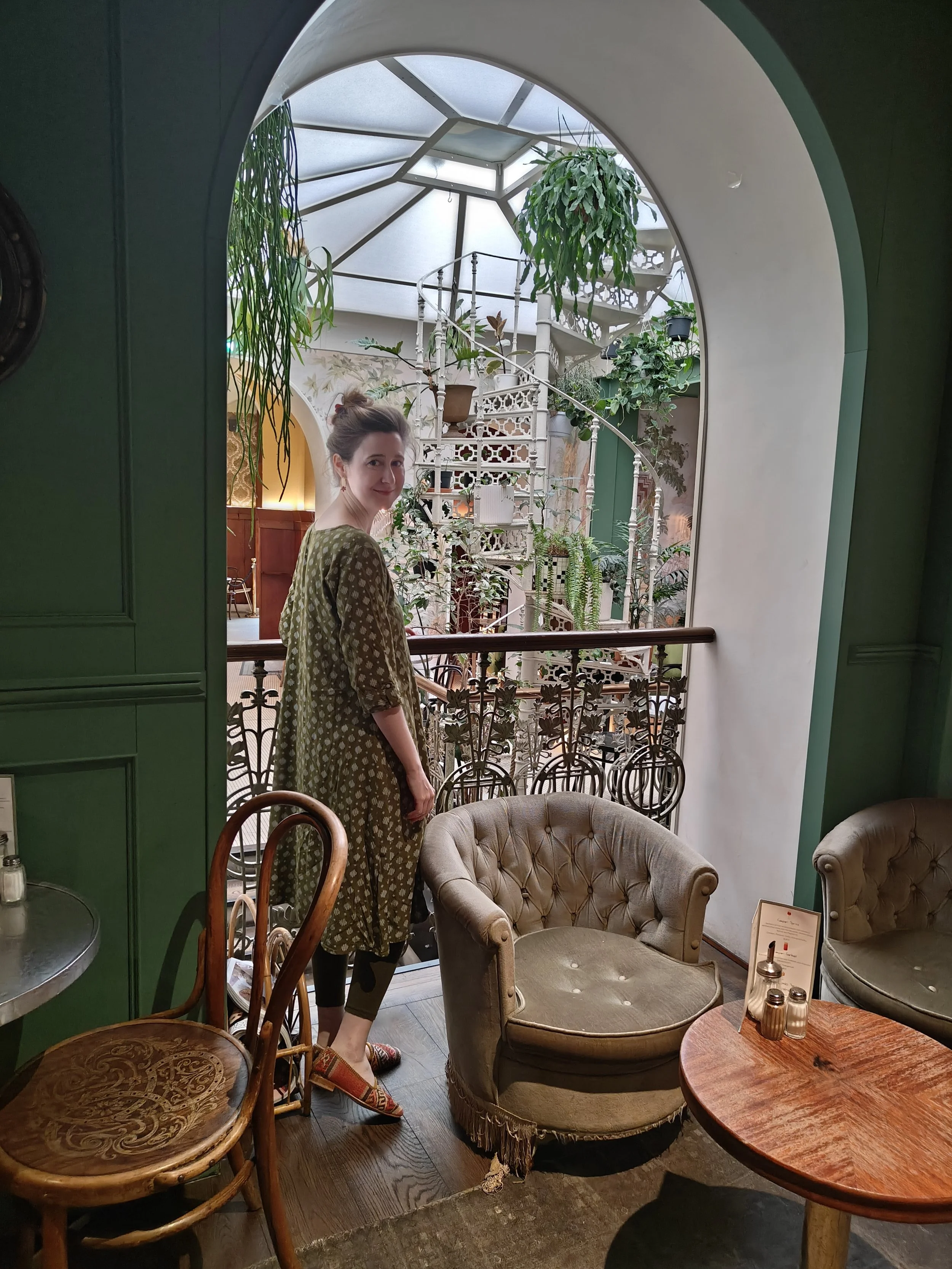
I’m Agnès, a Fribourg-based grief coach supporting women as they rebuild their lives after separation or divorce. I offer coaching in fluent German, French, and English. Growing up in Venezuela, Kenya, Switzerland, and Austria, and later living in France and the United States, has given me an intercultural lens that I bring to our conversations.
Why this work matters to me
The end of my own marriage turned my life upside down. I grieved our relationship and the future I had imagined while moving from Germany to Switzerland and redirecting my career. Feelings of failure, shame, and guilt sat alongside everyday decisions and paperwork. How could I hold such deep upheaval and still keep functioning?
Part of me wanted to press rewind; another wanted to fast-forward. What helped was pressing pause and finding my footing in the present. With time, patience, curiosity, humour, and support, I learned that loss is part of our experience—not the whole of who we are. For me, transition is not simply a bridge to a distant new beginning; it is already the beginning, deserving time, attention, and care.
How I work
This experience shapes the reflective space I offer: room to grieve, recognise your resources, and consider what comes next. Through attentive presence, thoughtful questions, and practical methods, I support you in making decisions with greater clarity. There is no pressure to find a lesson, become stronger, or move on quickly; we follow your pace, meaning, and priorities.
A question that supported me still informs my approach: “I am already hurting enough—what can I contribute so that I don’t hurt even more?”
My work draws on training in NLP and hypnosis coaching and my ongoing CAS in Systemic Counselling, with a focus on grief work, trauma-sensitive counselling, and embodiment. I use these methods selectively, transparently, and only with your agreement. Coaching does not replace psychotherapy, medical treatment, or crisis support.
The image behind the work
During my divorce, I pictured a damaged heart, mended without hiding its seams, with gold marking the joins and a small crown on top. This tender, playful image reminded me that becoming whole did not mean returning to who I had been before.
It remains at the heart of The Life That Fits: acknowledging what happened, caring for what was hurt, and consciously reimagining life rather than trying to restore the past.
Beyond coaching
Beyond coaching, I’m a historian and work as an archivist. I love second-hand bookshops, poetry, opera, mountains, beaches, and learning languages. With family and friends, there are often homemade pralines, hot beverages in beautiful teahouses, witty conversations and lots of humour.
Laughter—still, to me, one of the most beautiful sounds we make.
Contact
Start with a simple conversation
If you are considering coaching, you are welcome to get in touch. During an introductory free conversation of about 20–30 minutes, we can briefly discuss what brings you here, what you are looking for, and whether The Life That Fits may be an appropriate form of support.
You do not need to have a fully formed goal. A few sentences about your situation and what you hope coaching might support you with are enough.
Coaching can take place in German, French and English. It is possible to have sessions online or in-person.
We begin with a longer first session of 90–120 minutes. Together, we clarify your current situation, what matters most now, what you would like to work towards, and what form of support may be appropriate. After this first meeting, I will suggest possible next steps and a suitable number of sessions for you to consider. Regular sessions last 60 minutes. The longer first session gives us enough time to understand your situation and agree on a clear coaching focus.
Request a first conversation
Once you have sent your enquiry, I will reply with available times and practical information. Submitting the form does not commit you to coaching.
Important
This form is not monitored as a crisis service. If you are in immediate danger or need urgent mental-health support, contact your local emergency service or crisis service.